Errors
Collector's Guide to Rare Goldback Errors
Error Note Definition
Every collectible currency series eventually develops a fascinating subset of rare printing mistakes known as error notes. While Goldbacks are produced using one of the most technologically advanced currency manufacturing processes ever developed, no production system is entirely immune from occasional defects. These rare manufacturing anomalies have created an exciting specialty within Goldback collecting, with some error notes commanding substantial premiums due to their rarity and uniqueness.
Unlike damaged notes that have been altered after leaving the manufacturer, genuine Goldback error notes originate during the production process. Because Goldbacks are manufactured using multiple precision printing, deposition, lamination, and finishing stages, collectors have discovered a variety of distinct error types over the years.
This guide explains the major categories of Goldback error notes and documents the known examples reported by collectors.
What Is a Goldback Error Note?
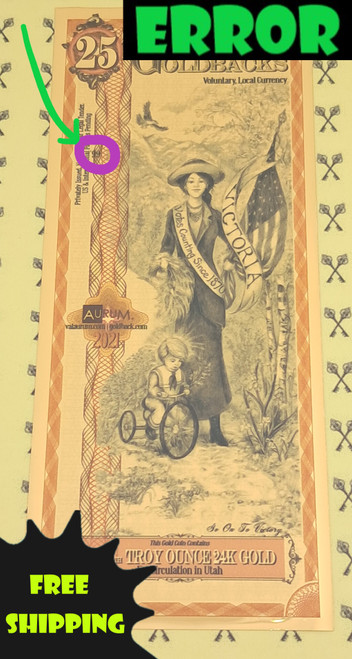
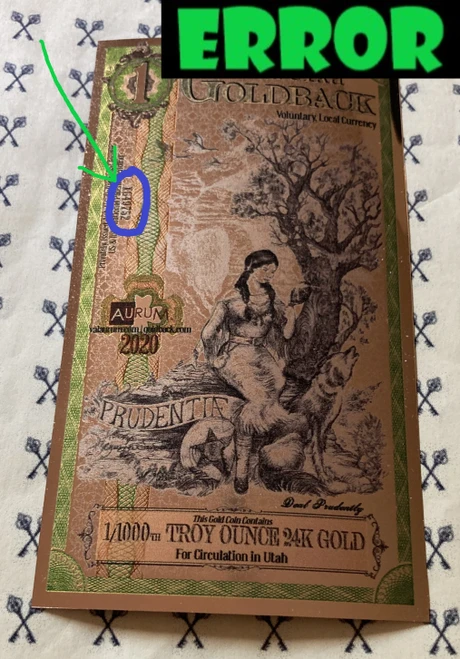
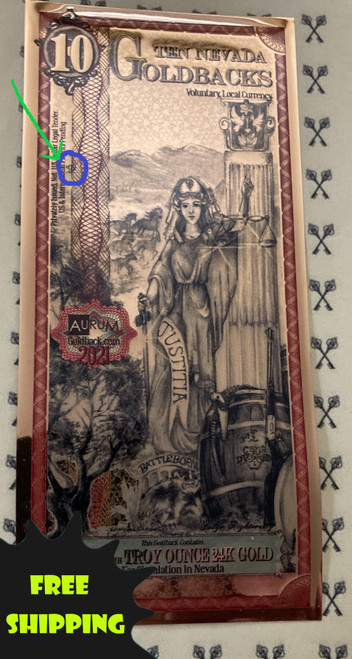
A Goldback error note is a note that left the manufacturing facility with an unintended production defect. These errors occur during printing, gold deposition, registration, cutting, lamination, numbering, or packaging.
A true error note differs from:
- Circulation damage
- Environmental discoloration
- Bent or folded notes
- Intentional alterations
- Counterfeit reproductions
Because Goldbacks undergo extensive quality control, authentic production errors are considerably scarcer than ordinary Goldbacks.
Major Categories of Goldback Error Notes
1. Serial Number Errors
Collectors closely watch serial numbers for unusual varieties as these are by far the most commonly recorded error type.
Examples include:
- Duplicate serial numbers
- Missing serial numbers
- Partial serial numbers
- Misprinted serials
- Upside-down numbering
At present, very few confirmed serial-number errors have been publicly documented.
2. Cutting Errors
Finished Goldbacks are cut from larger production sheets. Rarely, cutting equipment may produce notes with unusual margins.
Examples include:
- Off-center cuts
- Oversized margins
- Narrow borders
- Mis-cut corners
Extreme cutting errors are especially desirable because they clearly demonstrate the production process.
3. Lamination Errors
Since Goldbacks are polymer composite notes, occasional lamination defects have been reported.
These include:
- Wrinkles
- Embedded debris
- Delamination
- Air bubbles
- Surface distortion
4. Printing Defects
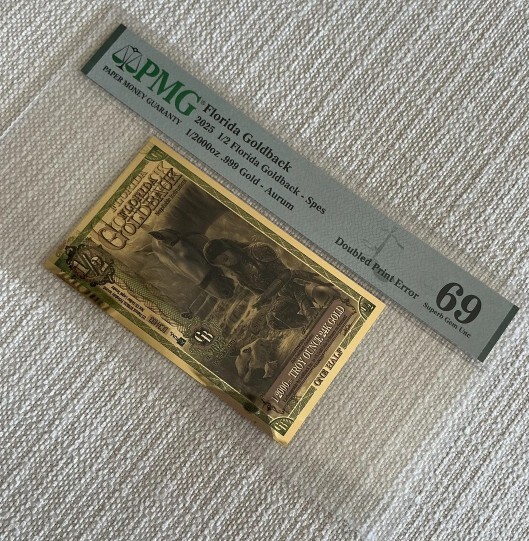
Printing defects are the rarest know error as there is only 1 known example of this type of error.
5. UV-Reactive Ink Errors
Beginning with the introduction of UV-reactive Goldbacks, a new category of collectible errors became possible.
Potential examples include:
- Missing UV artwork
- Partial UV printing
- Shifted UV designs
- Incorrect UV registration
Because UV-reactive Goldbacks are relatively new, very few examples have yet been reported.
Known Goldback Error Notes
The following Goldback errors have been publicly documented or reported by collectors. As additional examples become known, this list will continue to grow.
| Series | Denomination | Error Type | Notes |
|---|---|---|---|
| 2019 Utah | Various | Miscut examples | Several off-center cuts reported. |
| Nevada | Various | Registration shifts | Small number reported by collectors. |
| Various Series | Various | Lamination defects | Occasional examples with wrinkles and bubbles. |
The Rarest Goldback Errors
The rarest Goldback errors are generally those that are immediately visible without magnification and that clearly occurred during production. Examples include:
- Major missing gold deposition
- Extreme off-center cuts
- Large registration shifts
- Major lamination defects
- Unique production anomalies
Because relatively few Goldback errors have been publicly documented, each newly discovered example helps collectors better understand the production process.
How to Authenticate a Goldback Error
Not every unusual-looking Goldback is a genuine mint error. Collectors should consider:
- Whether the defect could have occurred after manufacture.
- Whether the polymer layers show evidence of damage.
- Whether the gold layer appears naturally interrupted rather than scratched away.
- Whether other collectors have reported similar examples.
- Professional grading by PMG or another recognized authentication service when appropriate.
Collecting Goldback Errors
Goldback error collecting remains one of the newest specialties within modern numismatics. Because the total population of authenticated errors is still very small, many varieties may be undiscovered. As more Goldbacks enter circulation and additional series are released, collectors will undoubtedly identify new error types and previously unknown varieties.
Collectors who enjoy owning truly unique pieces often seek error notes because no two are exactly alike. Some may be one-of-a-kind manufacturing accidents, making them among the most desirable Goldbacks available.
Help Build the Goldback Error Registry
If you believe you have discovered a Goldback error note, consider documenting it with high-resolution photographs of both sides of the note, close-up images of the error, the serial number, and (if applicable) ultraviolet photographs showing hidden artwork. Sharing verified examples with the collecting community helps establish rarity, identify new varieties, and expand our knowledge of Goldback production.
As additional errors are confirmed, this page will continue to evolve into a comprehensive reference for Goldback collectors seeking to identify and understand these fascinating manufacturing anomalies.